Cambodian cuisine, or Khmer food Culture, is a captivating mixture of fresh ingredients, rich tastes, and age-old culinary techniques. This healthy and lively food is not only rooted in agriculture, rivers but also in the blending of flavors with the neighboring countries Thailand and Vietnam. If you are a tourist, a foodie, or merely interested in Southeast Asian cuisines, a comprehension of Khmer food culture will certainly enhance your experience of Cambodia.
What Are the Staple Ingredients in Khmer Food?
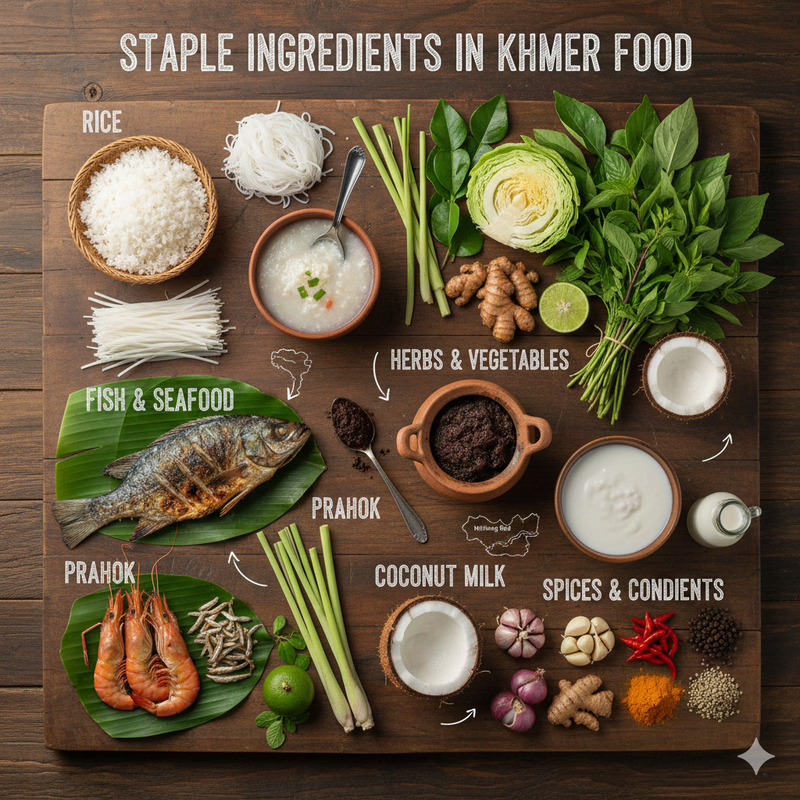
Khmer cuisine is characterized by the following staples:
- Rice: The foremost ingredient, typically served steamed, as noodles, or in the form of porridge.
- Fish and seafood: Mainly from the Mekong River and Tonle Sap Lake.
- Prahok: The fermented fish paste is used as an ingredient in soups and stews.
- Herbs and vegetables: such as lemongrass, kaffir lime leaves, basil, mint, morning glory, and cabbage.
- Coconut milk: giving richness to curries and desserts.
- Spices and condiments: garlic, shallots, chili, turmeric, ginger, and black pepper.
How long is the eVisa for Cambodia for Tourists?
Based on the speed of e-Visa approval, pick your favorite processing method. Processing times are only estimates and can change according to the number of applications and the verification process.
- Normal Processing (3–5 Days)
The standard processing option is fit for the majority of travelers.
- Rush Processing (2–3 Days)
Fastest processing for applicants who want their visa earlier.
- Super Rush Processing (1–2 Days)
The quickest approval time is offered through priority processing for urgent travel needs.
What documents are needed to enter Cambodia?
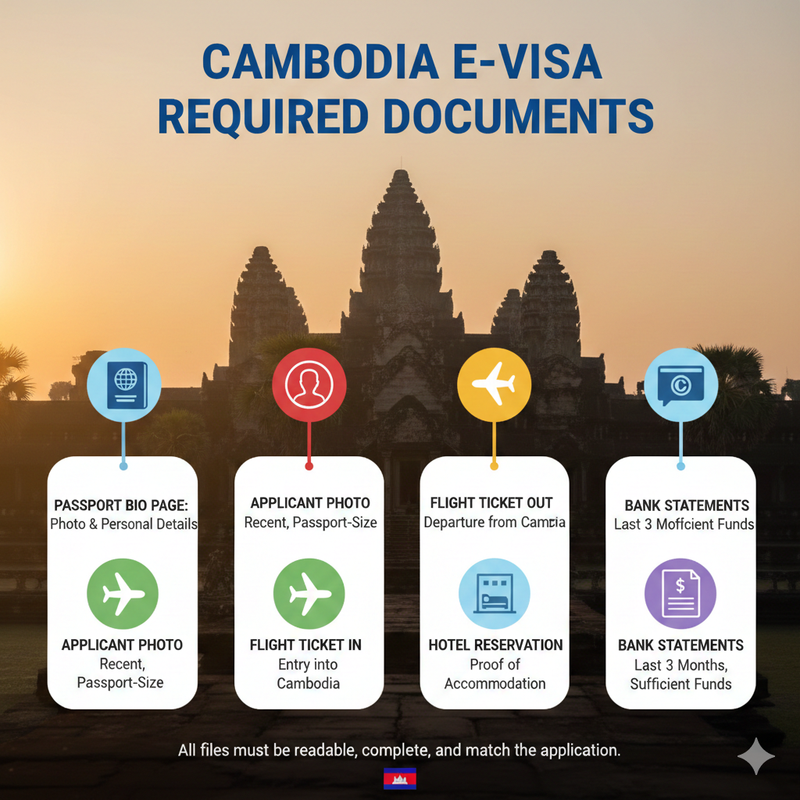
Please upload clear and valid copies of the following documents to support your e-Visa application. All files must be readable, complete, and match the information provided in your application form.
- Passport Bio Page Upload a clear copy of the passport information page showing your photo and personal details.
- Applicant Photo Upload a recent passport-size photograph with a plain background.
- Flight Ticket In:Upload a copy of your inbound flight ticket showing your entry into the country.
- Flight Ticket Out Upload a copy of your outbound flight ticket confirming your departure.
- Hotel Reservation Document Provide proof of accommodation for your stay, such as a hotel booking confirmation.
- Last 3 Months Bank Statements Upload bank statements from the last three months showing sufficient funds to cover your trip.
Is Khmer Food Similar to Vietnamese Food?
Khmer and Vietnamese cuisines have similarities in terms of ingredients and cooking techniques, but their tastes and styles are completely different. Here’s a breakdown:
- Geographical Influence: The origin of both cuisines is Southeast Asia, therefore rice, fish, and fresh herbs are the common staples.
- Flavor Profile: Khmer food has the least spicy and subtle flavor profile, often applying lemongrass, kroeung (spice paste), and coconut milk. Vietnamese food is more powerful and has a sweet, astringent, salty, and umami flavor simultaneously.
- Herbs and Vegetables: Both use fresh herbs, but Vietnamese dishes often feature mint, coriander, and pickled vegetables more abundantly.
- Cooking Techniques: Soups, stir-fries, and grilled dishes are typical of both cuisines.
- Unique Identity: Although there are some similarities, Cambodian dishes are uniquely aromatic and soothing, thus reflecting the country’s culinary heritage.
What Are Popular Khmer Dishes to Try?
Cambodian cuisine is rich in flavors and has a good variety of dishes that you must try some of which are:
- Amok Trey: The fish is cooked in a mixture of coconut milk and a variety of spices, then wrapped in banana leaves and steamed.
- Samlor Korkor: A steaming hot soup made of vegetables and meat, with prahok (fermented fish) as the main ingredient.
- Nom Banh Chok: A rice noodle dish with a green fish curry, mostly for breakfast.
- Lok Lak: Beef slices fried in a wok, served on rice with a lime-pepper dipping sauce.
- Bai Sach Chrouk: Pork is grilled and served with broken rice, it is one of the common street food breakfast items.
How Much Is the eVisa Fee to Cambodia?
The requirement of Cambodia eVisa Fees is to make a payment while applying online but the amount will be different at times. Here are the things that travelers need to be aware of: Mandatory Fee: To process and grant the application, an eVisa fee is mandatory.
Visa Type Determines the Fee: The fee can be different by the intended usage for the trip and the type of visa.
Online Payment: The payment is most often made online through a card or other method during the application process.
Non-Refundable: The fee is usually not refunded after it has been paid, even if there are changes in the travel plans.
Additional Charges: Depending on the method of application, some applicants might see extra service-related charges.
It is advisable to go through all the details thoroughly before applying for the Cambodia eVisa.
Is Khmer Street Food Safe to Eat?
Khmer street food is a tasty way to know more about the culture of Cambodia, but at the same time, it is necessary to observe some safety measures:
- Freshness Matters: Pick the stalls with the largest turnover of food to get the freshest ingredients.
- Cooked vs. Raw: Go for cooked items such as grilled meats, fried noodles, or soups rather than raw ones.
- Cleanliness: Make sure that the cooking area and utensils look clean. Vendors who do not mix money and food are safer.
- Drink Safe Water: Stay clear of ice or drinks made from tap water; bottled beverages are the best.
- Local Recommendations: Visit the favorite stalls of locals—they usually know the vendors who are trustworthy.
If you choose wisely and are careful, street food can be both safe and tasty.
How Long Can Tourists Stay in Cambodia?
Cambodia has different policies for tourists concerning the duration of stays according to the type of visa they have been granted. The following is an easy representation of the situation:
Standard Tourist Stay: The visitors are typically given a short-term stay that allows them to do sightseeing and leisure travel.
- Extension Option: Tourists can sometimes extend their stay a single time if they want to go on exploring.
- Purpose of Visit: Tourist stays are not for work but only for travel, holidays, and cultural experiences.
- Entry Conditions: The allowed stay may differ according to the nationality of the traveler and the type of travel approval.
- Overstay Awareness: Staying longer than the allowed time can create problems, thus verifying the period of stay is very important.
To ensure a smooth and enjoyable stay, it is recommended to plan your trip duration in advance.
Are Khmer People Friendly?
Khmer individuals are characterized by their friendly and hospitable nature thereby rendering Cambodia a tourist-friendly country:
Warm and Polite: The locals frequently welcome tourists with their facial expressions and the “sampeah,” a courteous gesture.
- Helpful Nature: Travelers in Cambodia can count on the locals' help in various ways like getting directions, receiving good places to visit or obtaining insider information.
- Community-Oriented: The tight-knit families and communities’ values are the reasons for their warmth towards even the strangers.
- Patient and Calm: The people usually act with patience and gentleness in the circumstances.
- Cultural Respect: The people who visit and Respect the local practices are generally given friendly responses as a reward.
All in all, Khmer people are very easy to interact with and that is why the travel experience in Cambodia is fun and unforgettable.
What Are Traditional Khmer Cooking Techniques?
Khmer dishes rely on different methods of cooking, such as:
- Steaming: Fish and sweets are the usual candidates for this.
- Grilling: A smoky taste is achieved by grilling meats and seafood over charcoal.
- Stir-frying: The process is fast and allows the foods to keep their taste and nutrients.
- Simmering: Hours-long simmering brings out the rich flavors in soups and curries.
- Fermenting: Prahok and pickled veggies are daily necessities that make the taste richer.
Are Cambodian Desserts Unique?
In fact, desserts of Cambodia are mainly sweet but light, and coconut milk and tropical fruits are the commonest ingredients among them. Some of the most famous desserts are:
- Num Ansom: A sticky rice-filled banana wrapped in banana leaves.
- Pumpkin custard: A steamed pumpkin filled with egg and coconut milk.
- Sticky rice and mango: A plain but very popular dessert.
Basically, these desserts are the ones that take you through Cambodia's nature sweetening and fresh ingredients' usage.
How Old Is Khmer Food Cooking?
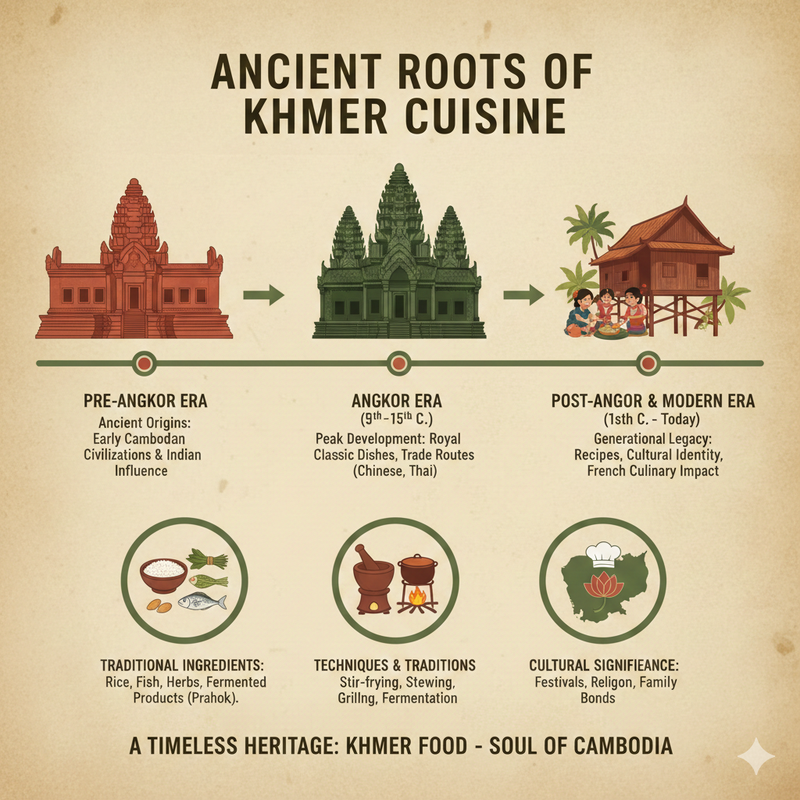
The cooking of Khmer food is an ancient tradition that tells the story of the country’s culture and customs:
- Ancient Origins: Khmer Cuisine has its roots in the very early days of the Cambodian civilizations which considerably influenced its development.
- Angkor Era Influence: The cooking methods during the Angkor period reached their peak and many of the dishes that are now referred to as classics were created.
- Traditional Ingredients: Rice, fish, herbs, and fermented products have formed the basis of the diet since the earliest times.
- Passed Through Generations: The sharing of recipes and cooking techniques was a common practice in families and communities.
- Cultural Identity: Khmer cooking is still very much part of the Cambodian culture, history, and religious practices.
In short, the cooking of Khmer food is a timeless tradition that still plays a major role in the preservation of the rich culinary heritage of Cambodia.
What Drinks Complement Khmer Meals?
Cambodian meals are usually served with:
- Tea: Oolong or black tea is the most usual and widely accepted accompaniment.
- Sugarcane juice: Just squeezed and very refreshing.
- Local beer: A bit light and not difficult to swallow with food.
- Fruit shakes: Shakes made from mango, papaya, or coconut are common, particularly with sweets.
The beverages are selected to bring out the best in the flavors and textures of the dishes.
Where Did Khmer Food Come From?
Khmer cuisine was gradually developed through the natural processes of Cambodia's nature, climate, and long history of cultural practice:
Ancient Cambodia: Khmer Cuisine originated in the early Cambodian civilizations, which were heavily reliant on agriculture and aquaculture.
Geographic Impact: The combination of the Mekong River and Tonlé Sap Lake practically guaranteed a continuous supply of fish and rice which influenced the diet.
Agriculture: Rice cultivation became the most important part of the daily meals and even the traditional dishes.
Use of Local Produce: The native herbs, vegetables, and spices constituted the very core of the Cambodian flavors.
Trade and Influence: Gradually, trade with neighboring countries affected the Khmer cooking but the original identity of the cuisine was maintained.
Khmer food is inseparable from Cambodia's natural resources and time-honored traditions.
Why Is Khmer Culture Important?
Khmer culture is the main factor that connects the past with the present and at the same time shapes the future of Cambodia. It forms the basis of the country's identity and the future of its heritage.
Historical Legacy: Khmer culture is the living testament of the past, reflecting centuries of history, the Angkor civilization, and ancient traditions.
Cultural Identity: The Khmer culture is the very base of the existence of the whole country that spreads through the language, customs, and daily life.
Art and Architecture: The unique artistic expression of the country is displayed through traditional dance, music, and temples.
Values and Traditions: Respect, community bonds, and spiritual practices are the core values of Khmers.
Cultural Continuity: The passing down of the traditions to the younger generations is what keeps Cambodia's heritage alive.
In short, Khmer culture is the main reason why Cambodia can still be perceived as a land of the past and at the same time be considered a contemporary society.
What Is the Best Currency to Use in Cambodia?
Cambodia's dual currency system facilitates the traveler's payment process. Here are the main points you need to be aware of:
US dollar, the major currency: The US dollar is the main currency accepted for hotel, tour, and other considerable payments.
- Cambodian riel for minor spending: The local currency is predominantly used for small things, markets, and local transport.
- Mixed Payments: Occasionally, the prices are quoted in dollars, and the change may be given in riel.
- Cash Is King: The cash is more widely accepted than credit cards, particularly in areas outside the main cities.
- Bring Fresh Money: The torn or damaged dollar notes are seldom accepted.
The combination of US dollars and Cambodian riels allows travelers to easily control their expenses in Cambodia.
Which SIM Card Is Best for Cambodia?
A local SIM card in Cambodia becomes a hassle-free option that connects everyone thus making it a great deal for travelers. Here are the top choices:
Smart Axiata: A favored option containing a strong presence in urban and tourist pockets along with the internet speed reliability.
Cellcard: The one that offers good data performance and is most usable for social media, maps, and browsing.
Metfone: Perfect for those who go off-road or to other areas, as it provides the largest coverage among the operators serving the nation.
Tourist-Friendly Access: Getting SIM cards is straightforward at the airports and local shops with immediate activation.
eSIM Availability: Some people would rather have an eSIM for immediate connectivity if their gadget supports it.
In summary, Smart Axiata is the best choice for most tourists, while Cellcard and Metfone are good alternatives according to the travel plan.
What Is Khmer Famous For?
The Khmer culture has gained a global reputation for its astounding history, rituals, and the arts, among others:
- Ancient Temples: The temples in Angkor have become one of the most recognizable representations of the Khmer .
- Traditional Cuisine: The dishes from Khmer have become popular for their mellow, aromatic flavors and the use of fresh local produce.
- Classical Dance: Khmer classical dance as well as Apsara dancing depict brilliant choreography accompanied by narration.
- Art and Handicrafts: Stone carving, silk weaving, and silverwork all show the top skill of the artisans.
- Warm Hospitality: The people of Khmer have a great reputation for being very nice and hospitable.
In general, Khmer has the distinct trait of being the foremost in ancient heritage with living traditions that have a great impact on today's Cambodia.
Conclusion
Khmer food culture is a complete mirror of Cambodia's history, geography, and lifestyle. Cambodian cuisine not only offers a variety of tasty foods but also narrates the history of the people through their customs, hardships, and support. The whole range of foods from rice dishes that warm the heart, and fish curries that are full of flavor, to lively street foods and soft desserts with coconut base, and every meal are still a declaration of the balance between taste and nutrition. The whole process of savoring Khmer food is like opening up a beautiful ore where the traveler and the foodie stand at the same place in the local culture; thus, the Cambodian cuisine would be no less than a substantial and unforgettable culinary adventure that is right to be discovered and appreciated.
Comments